Lunar Gallery
| The images below were taken by Chris Proctor | |
|
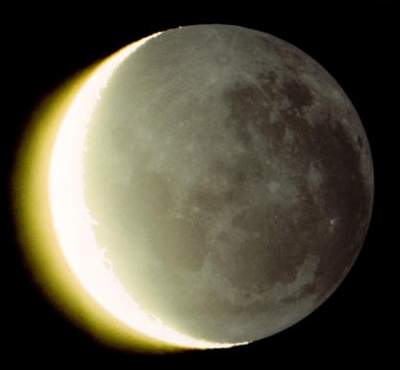
Crescent MoonThis picture of the crescent Moon was taken with the 50 cm reflector at the TBGS observatory on the evening of 18th April 1999. Earthshine (Sunlight reflected from the earth) illuminates the dark face of the Moon. The long exposure necessary to record the earthshine has greatly overexposed the sunlit crescent. |
|
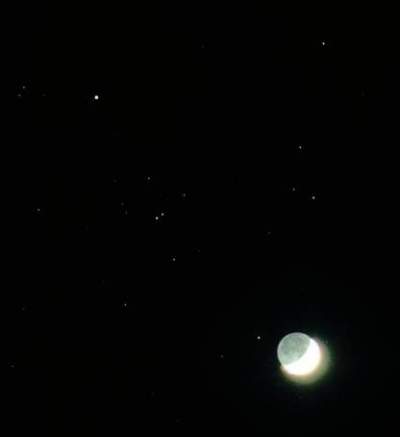
Crescent Moon against the background of the Hyades star cluster, 10th April 1997Earthshine illuminates the dark side of the Moon.Photographed with a 200mm lens, 10s at f4 on 400 iso film. |
| The rather surrealistic lunar image below and those following it were taken by TAS member Paul Chester. | |
|
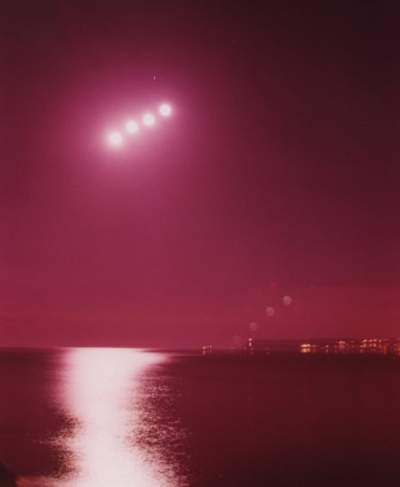
Four Moons!Four exposures of the moon (plus various reflections) above Berry Head, Torbay on 28th. August 1999. These were taken from Goodrington at 5 minute intervals with 30, 20, 15 and 10 second exposure times through a 55mm Nikon lens at f2.8 onto 400 A.S.A film. |
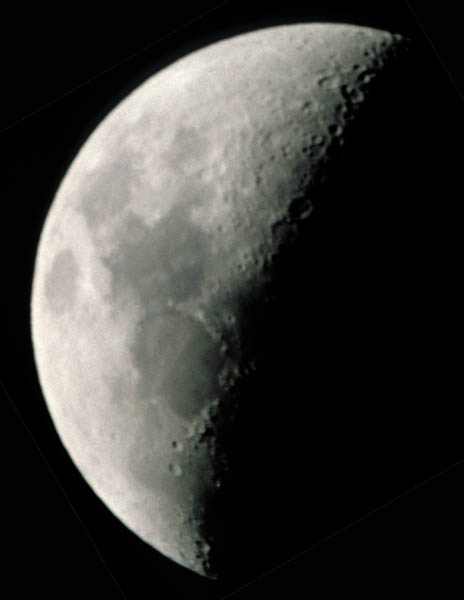 |
1st quarter Moon taken using the 20cm Meade telescope at the TBGS, at prime focus. |
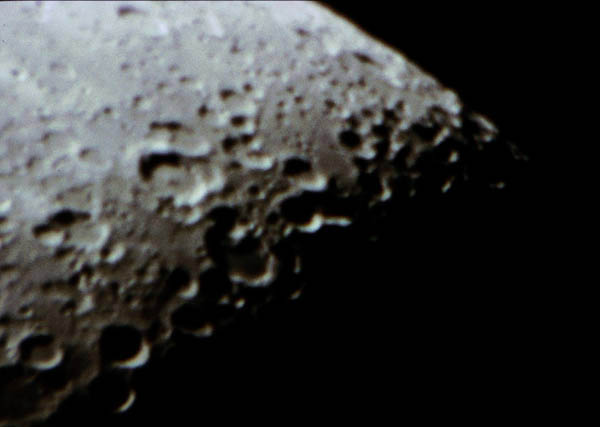 |
A closeup of the south polar region taken on the same night using eyepiece projection. This is the oldest and most rugged area of terrain to be seen on the near side of the Moon, and dates from soon after the Moon's formation. |
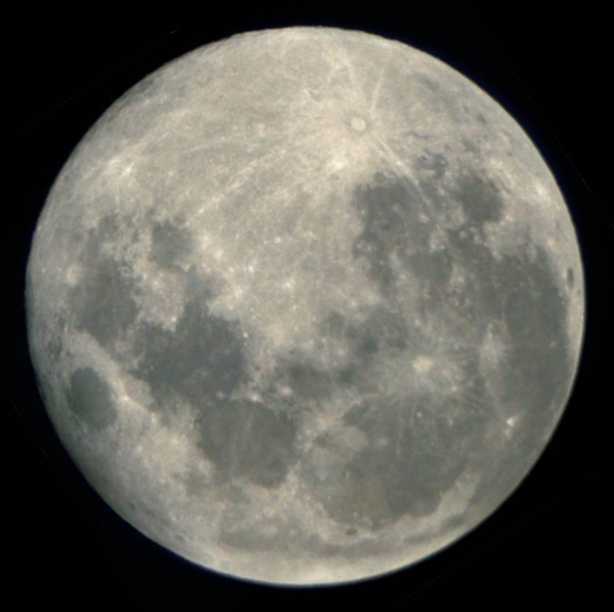 |
Full Moon, taken using a 20cm Dobsonian telescope and the afocal method. |
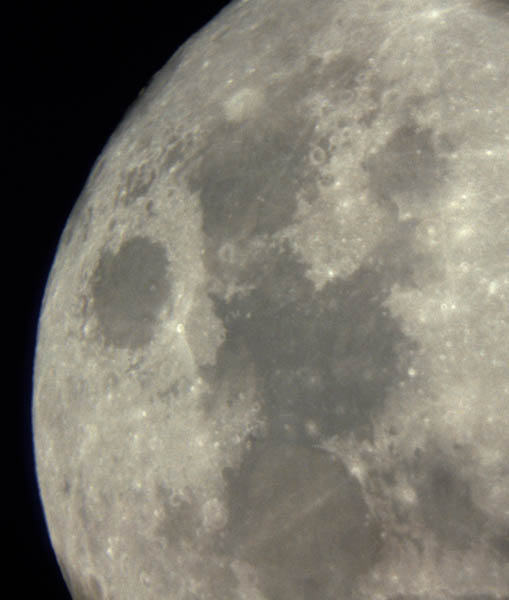 |
The Moons eastern "seas" taken with the same telescope as the last picture. Mare Crisium is the obious isolated circular "sea" on the left hand side. The three large "seas" in the middle of the picture are (top to bottom) the Mare Fecunditatis, Mare Tranquillitatis and Mare Serenitatis. |